Convicted spy Rod Ramsay as a potential Gardner heist suspect (Part 1)
Convicted spy Rod Ramsay as a potential Gardner heist suspect (Part 2)
Convicted spy Rod Ramsay as a potential Gardner heist suspect (Part 3)
Convicted spy Rod Ramsay as a potential Gardner heist suspect (Part 4)
Convicted spy Rod Ramsay as a potential Gardner heist suspect (Part 5)
Full Report Downloadable pdf version
Convicted spy Rod Ramsay as a potential Gardner heist suspect (Part Three)
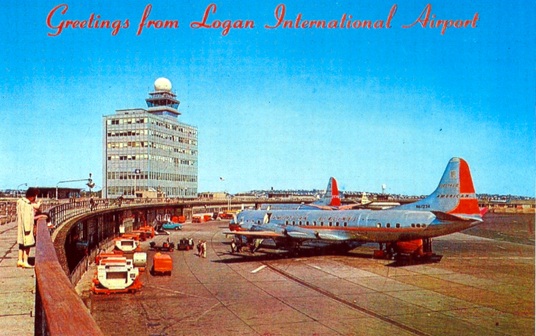 "Law enforcement sources said that the [Gardner heist] suspects'
movements are under close scrutiny by federal agents, including one suspect who was under surveillance during a recent arrival at Logan Airport."
"Law enforcement sources said that the [Gardner heist] suspects'
movements are under close scrutiny by federal agents, including one suspect who was under surveillance during a recent arrival at Logan Airport."
—Elizabeth Neuffer, Page 1 Boston Globe May 14, 1990
Meanwhile, on short notice, the FBI's field office had received instructions to seek out an interview with Rod Ramsay on the same day
that Conrad was placed under arrest:
"Anytime after 0400 hrs Zulu [eight o'clock a.m. in Florida and two o'clock p.m. in Bosenheim, West Germany] 8/23/88, you are to locate and interview Roderick James RAMSAY, last known
to be living in Tampa, Florida, regarding his knowledge of or association with Clyde Lee CONRAD while stationed at 8th ID, Bad Kreuznach, West Germany: service years 1983—85. INSCOM [Army Intelligence]
will liaise and assist: locate, interview, report."
Although the appearance of federal agents at his door that day was unexpected, Ramsay was not unprepared, and may not have been caught entirely off guard.
Conrad had told Army undercover agent, Danny Williams, months earlier, how
he suspected he was under investigation, and claimed to have warned his espionage confederates, though not the Hungarians, of this looming threat.
Toward the end of their first meeting, FBI agent Joe Navarro asked Ramsay if Conrad had ever given him
anything. With that prompting, Navarro wrote, in Three Minutes to Doomsday, Ramsay
took from his wallet a mysterious slip of paper with a hand-written telephone number on it, which Conrad had told him to call, if he had to reach him, Ramsay
told Navarro.
Navarro carefully placed the slip of paper into an envelope, and brought it back to the FBI Tampa field office.
An FBI lab determined that the note given to Ramasay was written on a water soluble paper of a kind sold in novelty shops. It was known to be
favored by Eastern European intelligence services, as well. The paper
dissolved instantly, when exposed to any liquid, such as saliva, making it useful for rapid disposal and destruction of sensitive information in an emergency.
The telephone number was quickly identified as one belonging to the Hungarian Intelligence Service, by one of the other members of Conrad's espionage gang,
Imre Kercsik, according to Navarro.
A Hungarian born physician, and Swedish national, Kercsik served as a courier for the spy ring
and was arrested, along with his brother, also a medical doctor,
soon after Conrad. Unlike Conrad, the two brothers cooperated with investigators. Four days after Conrad's arrest, and after the FBI's first interview with Ramsay,
the New York Times reported on the front page that the Kercsik brothers were under arrest, admitted working for the Hungarian intelligence service,
and that Sandor Kercsik "told Swedish officials that he first met Clyde Lee Conrad in 1974."
"Mr. Conrad is potentially a more valuable source of information," the article also reported,
"since he was responsible for obtaining the highly classified documents and could describe exactly which secrets were compromised."
But Conrad never cooperated, which made the interviews with Ramsay, Conrad's right hand man, with "a near photographic memory,"
as Navarro had testified, even more important.
The slip of paper given to Navarro by Ramsay represented hard evidence of Ramsay's personal involvement in espionage.
Interestingly, in a book called Damian and Mongoose, a first hand account written by an Army counterintelligence agent, Danny Williams, about his experiences working
undercover to investigate
Conrad, Williams describes how he too was
given a slip of paper with a contact phone
number to Hungarian intelligence.
It is hard to discern what Ramsay's exact motivations were in giving this slip of paper to Agent Navarro. Clearly it was incriminating.
Was he looking to recruit Navarro? Was he looking
to be recruited by Navarro in some sort of counterintelligence operation?
Whatever his motivation, the voluntary sharing of a melts-in-your-mouth slip of paper, would certainly have solidified the belief that Ramsay had been involved
in Conrad's espionage operation.
Less than a week after Ramsay's first interview with the FBI, he told Navarro in a subsequent meeting,
that in 1986, just a few months after he was discharged from the Army, he had met with Conrad in Boston,
where Ramsay was then living with his mother. Conrad was returning to his hometown of Sebring Ohio to visit family. He stopped briefly in Boston,
to meet with Ramsay.
Ramsay's espionage activities may have ended with the end of his enlistment and return to the United States, but it would be the responsibility of
federal investigators to ensure that was the case, and if not, then to try to find out what new projects he had taken on in the espionage realm, and with whom.
Navarro's book mostly treats his dealings with Ramsay as part of what seems more like
a standard criminal investigation, than a counterintelligence operation. He says as much to a former colleague, in trying to expedite a photo lineup, which includes Ramsay,
he wants to be shown to the Kercsik brothers. "This is no longer a CI [Counterintelligence] matter. It's a criminal matter that needs to be expedited.
We want to aggressively go after
Ramsay," Navarro told his fellow agent.
Three weeks later Navarro is informed that the Kercsik brothers had indeed picked "Rod Ramsay out of the photo lineup we sent and confirmed he was
involved in the Conrad case."
But then: "The next day, FBIHQ once again orders us to break off all
contact with Ramsay—an all-caps ORDER this time, the kind you can't ignore. By the
time I'm again allowed to talk with Rod Ramsay, 357 days later, Lynn Tremaine [his partner on the Ramsay case] is
married and gone from the Tampa office, and the case against Ramsay has gone cold as
a Russian winter."
The Ramsay investigation was a counterintelligence matter after all, something that Navarro seemed to have understood (somewhat) more clearly when he was able to resume his interviews with Ramsay a year later.
For that first interview with Ramsay, the FBI's Navarro was accompanied by Al Eways of the U.S. Army Intelligence Security Command (INSCOM). It was Eways who was credited with doing
much of the dogged investigative work, of combing through Army personnel files and the backgrounds of individual soldiers,
who might fit the profile by virtue of those
having access to some or all of the classified documents known to be taken.
The effort led to the identification of Conrad as a suspect, and perhaps Ramsay as well. If it had not already been strongly suspected,
that Ramsay was involved in espionage, it seems doubtful that Eways would have been riding along with Navarro in Tampa, Florida,
on the same day that the spy ringleader, Clyde Lee Conrad, the big fish, whom Eway's had personally helped bring down,
was being placed in custody, in West Germany, thousands of miles away.
As early as April 1987, Conrad was convinced, and with good reason, that he was under investigation. He said as much to an old Army buddy, Danny Williams, who
was then working undercover in the investigation against him,
that he believed he was under investigation. This was 16 months before Conrad's arrest and the initial interview of Ramsay by Eways and Navarro, in August of 1988.
Ramsay claimed he had not communicated with Conrad since their meeting in Boston in 1986.
To address the danger an investigation posed, Conrad told Williams "I contacted everyone who has worked with me. "I said 'after I'm gone do whatever you want.'
I closed my accounts, destroyed all the material, and wiped information from my computers."
In any case, given the nature and scope of the espionage Ramsay would later confess to, the former Army sergeant
must have suspected, when two federal agents, one FBI, and one from the U.S. Army Intelligence and Security Command (INSCOM), showed up on his doorstep in Tampa, Florida,
unannounced on a summer afternoon, that he too was under suspicion, although the agents wishing to speak with him tried to downplay that possibility.
"You can relax, we're not here to talk about you, ”we just need to pick your brain about the Eighth Infantry Division," the FBI's Navarro told Ramsay standing outside his door,
after asking him, "Would it be okay if we come inside to talk?" Ramsay agreed.
"Happily, Rod is buying what I have to sell," Navarro concluded.
More likely, Ramsay, a smart and experienced spy and criminal, understood what was going on, but played along knowing that perhaps the best way to buy himself some time,
and perhaps at least some of
his freedom, was to negotiate with that one thing he had of value: the information he possessed about operations within the Szabo-Conrad spy ring.
In addition to the book about Navrro's experience interviewing Ramsay, Three Minutes To Doomsday, written a quarter century later,
there is another less known book, called
Damian and the Mongoose, How a U.S. Army Counterespionage Agent Infiltrated an International Spy Ring,
like Navarro's a first-person account
written by former MSgt. Danny Williams, about his relationship with Conrad, while working undercover to investigate
him, published in 2011.
There are striking similarities in how MSgt. Williams and FBI agent Joe Navarro dealt with
the close range investigative process they were engaged in, that of conversing with suspected spies.
But what is even more striking is how similar Clyde Lee Conrad and his former espionage protege Rod Ramsay responded to the danger Navarro and Williams represented,
to them personally.
So call them, maybe
As mentioned previously, just as Ramsay had given Navarro a piece of paper with the telephone number to Hungarian intelligence, Conrad had also given a number to Hungarian intelligence to Williams.
"I want you to have these. The first one is a number in Budapest for the Hungarian Intelligence Service, used by agents and couriers when they want to meet with someone. The second,
is the same type of number for the Czechs in Prague," Conrad told Williams.
Whether it was intentional or not, handing over the number was certainly a convenient way to put Williams and Navarro in direct contact with an enemy intelligence services,
where they
could perhaps, if they were so inclined, betray their country, and perhaps negotiate some kind of arrangement, which could include an exit ramp for Ramsay and Conrad as authorities closed in on them.
Perhaps a long shot, but if there was a way out
for Ramsay, it perhaps laid with turning his inquisitors into allies.
The purpose of the Army sending MSgt. Williams undercover, was for him to get reacquainted with Conrad, so they could find out more about
his espionage operation, and
so that they could catch Conrad in the act of recruiting him. Despite his suspicions of Williams initially, Conrad did try,
"Everything Clyde said, every story, every illustration was part of a determined effort to get me to volunteer
for espionage, which he hoped he could later claim was entrapment."
Ramsay, too, in one of his few meetings with Navarro without anyone else present, in the parking lot of the Orlando Sea World, seemed to be warming up to
making Navarro a recruiting offer. "Joe, be honest with me. Now that the Wall is down, does all of this matter? My
helping you, my reports, do they even amount to a hill of shit?"
But if this was the start of some kind of offer, it was quickly shut down by Navarro.
Both Conrad and Ramsay managed to recruit people into espionage without ever being turned in by anyone for doing so. There are subtleties to their sales pitches that
can not really be conveyed by individual quotes. But it is an impression one might take away from reading longer passages from these works.
In both Danny Williams' discussion undercover with Conrad, and Navarro's interview, not undercover, with Ramsay, there was discussion about an idea
of Conrad's to open a legitimate video rental business near a military base, as a front for gathering information about the soldiers who became customers.
"Well," Rod says, "what if, hypothetically, Clyde wanted to set up a video-rental
business that wasn't really
about renting videos?" Ramsay said to Navarro.
In the case of Conrad in speaking with Williams it was a business proposition, in the case of Ramsay perhaps it was just another story of how brilliant
Clyde Lee Conrad was, or a demonstration of how easy it was to make money using some of the principals and methods developed by Conrad,
in the field of black market information brokerage.
Unlike MSgt. Williams, Navarro was not working undercover, but neither was he being entirely forthright about
his purpose in interviewing Ramsay either.
He was questioning Ramsay, he told him, to find out everything he could about the Szabo-Conrad spy ring, but really, what Navarro most especially wanted to find out
about was Ramsay himself, and his spying activities, and not just about Conrad and the Eighth Infantry Division, as he claimed to him initially.
Navarro made a concerted effort to keep things casual in his interviews of Ramsay.
"Don't wear anything that would make you look like an agent," Navarro instructed his new partner Terry Moody, when they were preparing to interview Ramsay.
"Jeans are fine,
but no skirt, no business suits," he told her. "On most occasions, I'll be wearing a polo shirt with
khaki pants, and for the record, my weapon will be
concealed, as will yours."
"We're not going after a confession," he added.
"We have to focus on what is important: small admissions that add up
until they satisfy the espionage statute."
"The worst thing you can do in interviewing is
set the bar at confession. What you want is what I was just talking about: facetime. Get
enough of it, and eventually you'll learn everything you want to know."
In his dealings with Conrad, starting in 1987, Williams favored an approach similar to Navarro's, and with even more compelling reasons.
He was working undercover, and was pretending to be just a fellow career soldier, trying to renew a friendship with his old Army buddy, Clyde Lee Conrad.
If his questions were too direct, Williams feared he would blow his cover, and if that happened, he also feared what Conrad might do.
"Conrad issued a threat to kill me if he decided I was part of the investigation [of him] he was sure he had discovered," Williams wrote.
It was a difficult and dangerous assignment, and Williams's higher-ups were nonetheless putting pressure on him to be more direct in asking Conrad about his espionage activities.
Both Conrad and Ramsay admitted from the start to being involved in illegal activities, although nothing as serious as espionage,
and both men implicated close military associates, early on, in espionage. Conrad
implicated Zoltan Szabo, the founder of the spy ring and the man who had recruited him into espionage, saying that
the retired Army soldier was now a Colonel in the Russian GRU. This claim by Conrad was an exaggeration, but one that
did point to Szabo, an associate of Conrad's, being involved in espionage.
Ramsay had implicated Conrad when he shared the phone number to Hungarian intelligence he said Conrad gave him, with the FBI.
Both Conrad in speaking to Williams, and Ramsay in speaking to Navarro seemed to sense that either a fight or a flight response would likely hasten
their being both under investigation and under arrest.
Both men strived to keep
their interactions amicable, in an effort to buy some time, for a little more freedom, or perhaps to develop some kind of an escape plan.
There was enough evidence against them, that talking kept
them out of jail, in the short run, but they were talking their way into prison in the long run. It was probably an unavoidable fate anyway, so maybe they bought themselves
an extra year of freedom, and an opportunity to figure a way out.
Conrad did bare his teeth now and again.
"Danny, if I find you're a threat to my family, I'll put a bullet between your eyes. Family is everything," Conrad told Williams, on the first day Williams met with Conrad at his home,
after many years of not
seeing or being in contact with each other. It was a threat he repeated more than once.
Both Ramsay and Conrad were not without some bargaining power, however. As Ramsay explained to Navarro, something that Conrad had taught him
was that "information was the most valuable thing in the world." While the information Ramsay had was not the most valuable thing in the world, it was not worthless either,
although much of it probably was. The U.S. Army was well aware that documents held in the G-3 plans section were potentially compromised, and that there was a leak,
and had likely implemented counter measures even before Ramsay arrived in West Germany.
even before in 1983.
Five years later, whatever military intelligence Ramsay held in his mind or in some other location was likely revised, replaced, adulterated, and mostly obsolete.
If the feds thought Ramsay had anything that was truly a danger to national security, they would not have left him out on the street driving a cab out of Orlando International Airport.
Upon completing his fifth interview with Ramsay, less than a month after he first met with him, Navarro said that he had already gained from Ramsay,
"a ladder of admissions that, when we finally get to confession or even if we
don't, will allow us to build the kind of rock-solid criminal case that can stand up
against the toughest defense...in less than a month."
But ten days later Navarro is ordered to break off all contact with Ramsay, and the case then "sat on the shelf for twelve months
and eight days."
These discussions with the two spies did have some value, for investigators, and as well as value for Ramsay and Conrad, who likely delayed their
arrest and incarceration.
Only Ramsay knew exactly what information he had: Sources and methods,and knowledge of the espionage ring itself,
which had operated for over 15 years from inside Eighth Infantry Headquarters. Ramsay definitely possessed some key information, not even known to Conrad himself, because
Ramsay had kept it a secret from him. He knew the identities of two other soldiers, who had engaged in espionage with him at Eighth Infantry Headquarters. These were individuals
whom Ramsay recruited himself, to assist him, without Conrad's permission or
knowledge. The two soldiers Jeffrey Rondeau, and Jeffrey Gregory eventually confessed based on information supplied to authorities by Ramsay.
Convicted spy Rod Ramsay as a potential Gardner heist suspect (Part Four)
|
By Kerry Joyce
